


Upcoming / 11th IERE Webinar:
Grid-Forming Inverters (GFMs)
October 16, 2026, 12:00–14:30 UTC
Organized by IERE
Open to the Public (This Time)
This event is normally intended for IERE members. However, this Webinar is open to the public to introduce IERE’s activities to a wider audience.
Free of Charge
Participation is free of charge for both IERE members and non-members.
Webex Registration
Registration is required. The deadline for registration is October 7, 2026.
Background
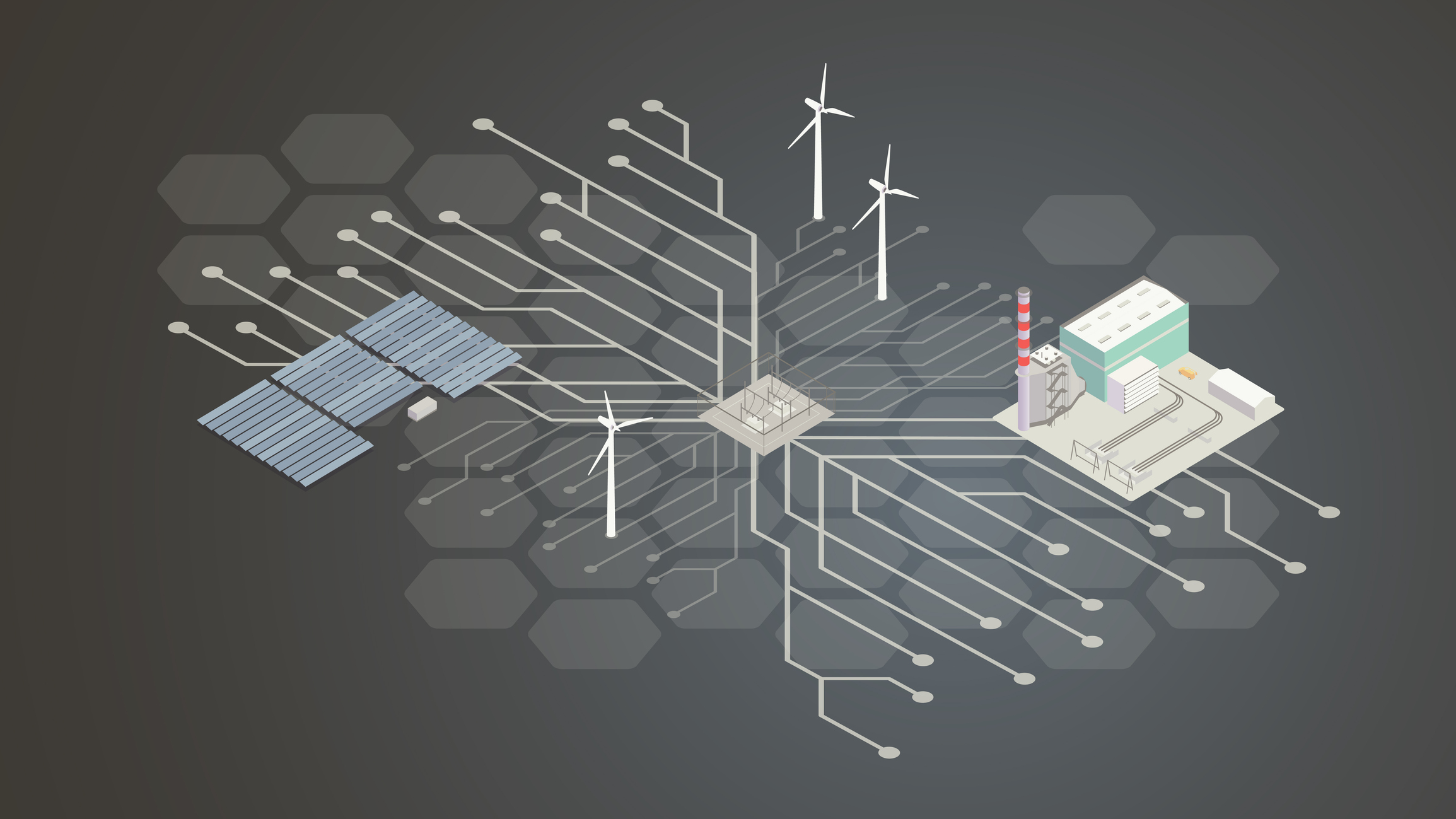
The deployment of renewable energy has accelerated rapidly in recent years and is expected to continue expanding worldwide. Solar and wind power account for the majority of the rapidly growing renewable energy, and these sources are connected to the power grid via inverters (power conditioners).
As the share of inverter-based resources continues to grow, new challenges regarding the power system stability are emerging such as reduced inertia, lower system strength, voltage sensitivity, converter-driven stability issues etc. To address these challenges, advanced technologies such as smart inverters, virtual synchronous generators, and GFM are attracting increasing attention.
In this context, sharing knowledge on GFM technologies and their research and development trends is considered highly beneficial, leading to the organization of this Webinar.
Objectives
GFMs are gaining global attention as a key enabling technology for enhancing power system stability, addressing reduced system inertia, and supporting the transition toward future low-carbon and carbon-neutral power systems.
This Webinar will provide expert insights into the fundamental concepts of GFMs, recent technological developments, practical applications in real power systems, and remaining technical challenges for their widespread deployment.
Moderator

NORO Yasuhiro
Professor Emeritus, Kogakuin University
Japan
Contact: noro[at]cc[dot]kogakuin[dot]ac[dot]jp
Lecturers
NORO Yasuhiro
Professor Emeritus, Kogakuin University
Japan
Contact: noro[at]cc[dot]kogakuin[dot]ac[dot]jp
Abstract:
Grid-Forming (GFM) inverters are an essential technology for the widespread adoption of renewable energy. This presentation begins by providing an overview of GFM technology and outlining the associated challenges. Next, the structure of this Webinar is briefly introduced. Finally, the authors present case studies on applying GFM technology to large-scale power grids, as well as investigations into enabling photovoltaic systems to exhibit GFM characteristics without energy storage.
Biography:
Yasuhiro Noro completed the master’s program in Electrical and Communication Engineering at the Graduate School of Engineering, Tohoku University, in 1982 and joined Toshiba Corporation that same year. He received his Ph.D. in Engineering from Hokkaido University in 2003. In 2015, he was appointed as a professor in the Department of Electrical and Electronic Engineering at Kogakuin University. From 2025, he serves as an Executive Researcher at the Energy and Environmental Technology Research Institute Co., Ltd. He is a Professor Emeritus at Kogakuin University. His research and development expertise covers areas such as power system analysis and control, the application of power electronics to power systems, and the interconnection and control of distributed energy resources.
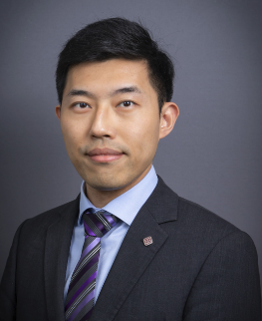
BU Siqi, Professor
The Hong Kong Polytechnic University
Hong Kong
Contact: siqi[dot]bu[at]polyu[dot]edu[dot]hk
Abstract:
As the penetration level of renewable power generation increases, modern power systems have gradually shifted to power electronic converter-dominated architecture, making converter control schemes growingly crucial in determining power system dynamics. A growing number of grid-forming (GFM) converters has been introduced to replace and co-exist with grid-following (GFL) converters that have been largely employed by renewable power generations with maximum power point tracking, in order to mimic the role of traditional synchronous generators in providing system inertia and damping. This talk aims to introduce different impact mechanisms of GFL and GFM converters on power system oscillatory stability, and reveal how the root causes and occurring scenarios of oscillations evolve during the transition from GFL to GFM converter-integrated power systems. Although GFM converters enhance frequency and voltage support and facilitate renewable integration, their power synchronization, AC voltage, and inner control dynamics create new interaction pathways and instability risks. Representative practical and simulation case studies illustrate emerging oscillations in strong-grid battery energy storage system (BESS) plants, GFM-HVDC systems, and hybrid control-based converter clusters. The talk concludes that the deployment of GFM converters should balance the enhancement of grid support capability with management of dynamic interaction risks, and requires a shift from single-device performance optimization toward multi-converter & multi-control loop analysis and coordinated active damping control.
Biography:
Siqi Bu is currently a Professor and Associate Head with the Department of Electrical and Electronic Engineering, The Hong Kong Polytechnic University, Associate Director of Research Centre for Grid Modernisation, and the Founder & Leader of Renewable Integration and Smartgrid Application (RISA) research lab. He was with National Grid UK as an experienced UK National Transmission System Planner and Operator. He is also a Chartered Engineer with UK Engineering Council via IET. His research interests include power system stability, operation and economics considering renewable energy integration, smart grid application and transport electrification.
Ir Prof. Bu is an Editor of IEEE Transactions on Power Systems, IEEE Transactions on Consumer Electronics, CSEE Journal of Power and Energy Systems, Protection and Control of Modern Power Systems, Journal of Modern Power Systems and Clean Energy, Advances in Applied Energy and iEnergy. He served as Chairman of IET HK Power and Energy Section, Co-Chairman of IET DPSP 2025/2027 and APSCOM 2025, and Technical Program Chairman of Inaugural IEEE PESIM 2026. He is a Fellow of IET, a Fellow of HKIE, and a World’s Top 2% Most-cited Scientist ranked by Stanford University and Elsevier.

Wenzong Wang
Senior Team Lead
EPRI
US
Abstract:
This presentation provides an overview of grid-forming technology developments in North America and around the world, covering practical applications in both transmission and distribution systems, key use cases, and implementation experience. It also explores future deployment pathways, outstanding challenges, and the outlook for broader grid-forming technology adoption in the coming years.
Biography:
Dr. Wenzong Wang is a Senior Team Lead at EPRI, specializing in the Integration of DER. He has led numerous projects related to modeling and grid impact studies of inverter-based DERs. His work primarily focuses on grid-forming inverter control and its
applications in both microgrid and grid-connected operations. Before joining EPRI, Dr. Wang earned his Ph.D. from Texas A&M
University, College Station, USA, in 2019.

ShuRan Liu
HVDC Market Product Manager – North Asia
Hitachi Energy
China
Contact: shuran.liu[at]hitachienergy[dot]com
Abstract:
Grid-forming (GFM) capability is becoming a key technology for future renewable power systems. This presentation introduces how VSC-HVDC has already demonstrated many grid-forming functions in practical applications, including weak-grid operation, renewable integration and voltage and frequency support. Drawing on operational experience and project examples, the presentation discusses the evolution of Grid-Forming HVDC and its future role in offshore wind integration, multi-terminal HVDC systems, and future DC grids supporting the global energy transition.
Biography:
ShuRan Liu received his Ph.D. in Electrical and Electronic Engineering from the University of Manchester, specializing in power and energy systems. He joined ABB Power Grids (now Hitachi Energy) in 2019 and currently serves as HVDC Market Product Manager – North Asia at Hitachi Energy’s Grid Integration business unit. His work focuses on HVDC marketing, business development and product management, including offshore wind integration, renewable energy transmission, multi-terminal HVDC, and future grid technologies. He has extensive experience in power system consulting and power electronic solutions, supporting the transition toward resilient and sustainable power systems.

MIYAZAKI Satoshi
Senior Researcher, TEPCO Research Institute
Japan
Contact: miyazaki[dot]sa[at]tepco[dot]jp
Abstract:
The increasing penetration of renewable energy resources is reducing power system inertia and raising concerns about frequency stability. To address this challenge, Japan is advancing the development of grid-forming (GFM) inverter technology through a national project funded by the New Energy and Industrial Technology Development Organization (NEDO).
This presentation provides an overview of the project, including inverter development, testing and validation activities, and power system stability studies. Prototype GFM inverters based on different control schemes have been developed and evaluated through both laboratory and field testing. In addition, simulation studies are being conducted to assess the contribution of GFM inverters to enhancing system stability in future low-inertia power systems.
The outcomes of the project are expected to support the practical deployment of GFM technology and contribute to the development of future grid codes in Japan.
Biography:
Satoshi Miyazaki joined Tokyo Electric Power Company (TEPCO) in 1984 and began his career in the Substation and Power Plant Maintenance Department, where he was engaged in power plant performance measurements and protective relay testing.
Since joining TEPCO’s Research and Development Center in 1986, he has conducted research in a wide range of technical fields, including sodium-sulfur (NAS) batteries, power semiconductor devices, high-voltage direct current (HVDC) transmission systems, power electronic converters for electric power systems, and grid interconnection technologies.
Since 1994, his research interests have focused on power quality issues such as harmonics and voltage sags, distributed generation, microgrids, photovoltaic (PV) systems, PV module degradation, utility-scale PV plant deployment and generation forecasting, solar irradiance measurement, lithium-ion battery evaluation, power system inertia estimation, and grid-forming inverter technologies.
His current research focuses on the integration of renewable energy resources into electric power systems and the development of advanced inverter technologies to support future power system stability and reliability.
Miyazaki is the inventor or co-inventor of more than 30 patents and has authored or co-authored numerous technical papers and conference presentations in the field of electric power systems. He has also served as a session chair at several technical meetings and conferences organized by the Institute of Electrical Engineers of Japan (IEEJ). He is a Senior Member of the IEEJ and has received both the IEEJ Paper Award and the IEEJ Outstanding Reviewer Award.

Michael Schwung
Senior Innovation Manager, E.ON Group Innovation GmbH
Germany
Contact: michael[dot]schwung[at]eon[dot]com
Abstract:
The energy transition is fundamentally transforming the power system and imposing new requirements on grid stability. Grid Forming Converters (GFMs) are considered a key technology for replacing the stability related functions traditionally provided by conventional power plants. In distribution grids, they also offer the opportunity to actively contribute to the stabilization of the overall power system and to provide ancillary services.
At the same time, power electronic based technologies introduce technical challenges such as harmonic oscillations, undesired interactions among multiple GFMs, and unintended islanding. In addition, organizational challenges arise, because operational experience with GFMs is still limited, and both grid connection procedures and operational processes need to be further developed.
This presentation highlights the opportunities and risks of deploying GFMs in distribution grids and presents E.ON’s current activities aimed at integrating GFMs into the grid and addressing the associated technical and operational challenges.
Biography:
Michael Schwung is a Senior Innovation Manager at the E.ON Group Innovation GmbH, the central innovation unit of E.ON, one of Europe’s largest grid operators. He leads a research program on grid-related topics with a focus on the stability and resilience of the grid. Before joining E.ON, he worked as a project engineer at RWE, a leading German energy producer. He has a background in Electrical Engineering and Information Technology and did his PhD in the field of networked control systems.

Lexuan Meng
Senior Product Manager, RWE Technology International GmbH
Germany
Contact: lexuan.meng[at]rwe[dot]com
Abstract:
Grid-forming Battery Energy Storage Systems (BESS) are becoming a key enabler of reliable power systems as renewable generation replaces conventional synchronous generation. This presentation introduces the market drivers and technical requirements for grid-forming BESS in Germany, with particular focus on the evolving system inertia landscape. It also shares RWE Generation’s experience in technology selection and project deployment, including a utility-scale case study highlighting key engineering and commissioning lessons. Participants will gain practical insights into the role of utilities in accelerating grid-forming BESS adoption and delivering reliable, efficient, and resilient power systems as well as insights on the influence of grid-forming capability on daily operations. (Joint presentation with Anika Weishaupt)
Biography:
Lexuan Meng received the B.S. and M.S. degrees in Electrical Engineering from Nanjing University of Aeronautics and Astronautics, China, in 2009 and 2012, respectively, and the Ph.D. degree in Power Electronic Systems from Aalborg University, Denmark, in 2015. He held research positions at Aalborg University and the University of Strathclyde before joining ABB (now Hitachi Energy), where he worked on advanced power electronics and grid integration technologies. He is currently a Senior Product Manager for Battery Energy Storage Systems (BESS) at RWE. His interests include power electronics, battery energy storage systems, grid-forming converters, and renewable energy integration. He is a Senior Member of IEEE and an active contributor to IEEE and CIGRE technical activities.

Anika Weishaupt
Technical Project Engineer, RWE Generation SE
Germany
Contact: anika.weishaupt[at]rwe[dot]com
Abstract:
(Joint presentation with Lexuan Meng. Please see the abstract above.)
Biography:
Anika Weishaupt received the B.Sc. and M.Sc. degree in Business Administration and Engineering with focus on Electrical Energy Technology from RWTH Aachen University, Germany, in 2016 and 2018, respectively. During her studies she interned with Daimler Trucks & Mitsubishi Fuso Truck and Bus Corporation in Stuttgart, GER, Kawasaki, JP, and Portland, USA, focusing on electrifying trucks. Anika joined Uniper Technologies after receiving her M.Sc. She is currently a Technical Project Engineer at RWE, responsible for operational readiness of new-built BESS and modification of existing BESS towards grid-forming assets.
Program (Tentative)
| (UTC) | Title | Presenter | Organization |
|---|---|---|---|
| 12:00 | Opening Address | Secretary General | IERE Secretary General |
| 12:05 | (Introduction) Grid-Forming Inverters: Overview of Technologies and Trends | NORO Yasuhiro, Professor Emeritus | Kogakuin Univ. (Japan) |
| 12:20 | Transition from Grid-Following to Grid-Forming: Challenges and Countermeasures | BU Siqi, Professor | The Hong Kong Polytechnic Univ. (Hong Kong) |
| 12:40 | Grid-Forming Technologies in North America and Beyond: Current Status and Future Outlook | Wenzong Wang/ Deepak Ramasubramanian | EPRI (US) |
| 13:00 | Grid-Forming HVDC: From Operational Experience to Future DC Grids | ShuRan Liu | Hitachi Energy (China) |
| 13:20 | R&D Activities on Grid-Forming (GFM) Inverters in Japan | MIYAZAKI Satoshi | TEPCO (Japan) |
| 13:40 | Application and Challenges of GFMs in Distribution Grids | Michael Schwung | E.ON (Germany) |
| 14:00 | Grid-Forming BESS Deployment in RWE Generation: Technology Selection and Project Experience | Lexuan Meng/Anika Weishaupt | RWEG (Germany) |
| 14:20 | Closing | NORO Yasuhiro, Professor Emeritus | Kogakuin Univ. (Japan) |
Local Time by Time Zone
| Time Zone | Local Time | Cities |
|---|---|---|
| UTC+02:00 | 14:00–16:30 | Amsterdam, Brussels, Essen, Paris |
| UTC+07:00 | 19:00–21:30 | Jakarta |
| UTC+08:00 | 20:00–22:30 | Beijing, Singapore, Manila, Kuala Lumpur |
| UTC+09:00 | 21:00–23:30 | Seoul, Tokyo |
| UTC+10:00 | 22:00–00:30 (next day) | Brisbane |
| UTC−04:00 | 08:00–10:30 | Charlotte |
Registration
Webex Registration
To join the Webinar, you need to register. Please click the Register Now button. You will be automatically transferred to the Webex Meetings registration site. Please fill in the necessary information and register there. Afterwards, the Central Office will send a registration confirmation email with the link. Please join the Webinar using the link 5–10 minutes before the scheduled start time to avoid last-minute problems.
The deadline for registration is October 7, 2026.
Must-Read
Tips for Attendees
Be prepared before the webinar starts
Review our Webinar tips for attendees and avoid technical issues by testing Webex Meetings on your device prior to the day of the Webinar.
Using the Chat Box
The Chat Box can be opened through your Webex menu.
This is used for submitting your content-related questions at any time. Please specify which presenter the question is for. During the Q&A time, the moderator will select the posted questions and the presenter will answer them.
In addition, technical questions about Webinar connections such as images and sounds can be put in the Chat Box. The staff of the Central Office will support you.
If you have any questions before the Webinar, please contact the IERE Central Office at:
office [at] iere [dot] jp
Please replace “[at]” with “@” and “[dot]” with “.” when sending your email.
Webinar Recordings
The Webinar will be recorded via Webex. Registered participants will be able to view the recording after the Webinar.
Join Us
Interested in IERE membership?
See the available options and how to apply.
Contact
Questions or proposals? We welcome your message.
Please also check our FAQ.