


10th IERE Webinar
HVDC Technology for the Next Generation Power Grid


10th IERE Webinar on HVDC Technology for the Next Generation Power Grid
Introduction
- In recent years, High Voltage Direct Current (HVDC) transmission technology has gained significant attention due to its potential for efficient energy transfer and reduced environmental impact. HVDC is poised to become a key technology in supporting next-generation power grids. It offers advantages such as long-distance, high-capacity power transmission, efficient integration of renewable energy sources, and interconnection between Alternating Current (AC) grids. However, the unique characteristics of HVDC systems, which differ significantly from conventional AC transmission, often pose challenges for understanding, even among engineering professionals. Europe has been at the forefront of HVDC development and implementation, and its practical application is progressing in China. While regional differences exist, we believe sharing this information will be highly beneficial, which is why we decided to organize this webinar. This webinar will cover a wide range of topics, including the fundamentals of HVDC technology, its applications, and the latest industry trends. To make the content accessible to participants without prior expertise in this field, we will begin with a clear explanation of the basics and present specific examples of how HVDC technology can be applied in real-world energy systems. Practical insights will also be shared to ensure that attendees gain knowledge relevant to their areas of expertise. Through this webinar, you will develop a foundational understanding of HVDC technology and gain valuable insights into its innovations and applications in the energy industry. Additionally, we hope to emphasize the critical role of HVDC in future energy systems and inspire participants to explore ways to incorporate HVDC into their own areas of expertise. We invite you to join us and take advantage of this opportunity to deepen your knowledge of HVDC technology. Following the webinar, we will consider inviting interested participants to take part in the next phase, such as a workshop.
Program
- Opening
- Lecturers
- Closing
Moderator

NAKAJIMA Tatsuhito
Professor, Department of Electrical, Electronics and Communication, Tokyo City University
Japan
Contact: tnaka[at]tcu[dot]ac[dot]jp
Lecturers
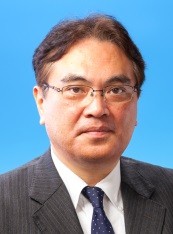
NAKAJIMA Tatsuhito
Professor, Department of Electrical, Electronics and Communication, Tokyo City University
Japan
Contact: tnaka[at]tcu[dot]ac[dot]jp
Abstract:
High Voltage Direct Current (HVDC) transmission offers efficient long-distance power delivery, seamless interconnection of asynchronous grids, and effective integration of renewable energy. This presentation introduces HVDC fundamentals, key technologies such as LCC, and VSC, including modular multi-level converters, and their applications in offshore wind, grid reinforcement, and cross-border links. Technical challenges such as multi-terminal HVDC will also be explained. Participants will gain insights into how HVDC supports reliable, sustainable, and future-ready power systems worldwide.
Biography:
Tatsuhito Nakajima received his doctoral degree from the University of Tokyo, Japan, in 1990. He joined Tokyo Electric Power Company in 1990. His main works were Research and Development on applying power electronics for power systems, including VSC-HVDC, STATCOM, and grid-connected inverters. He joined Tokyo City University as a Professor in 2016. His research topic covers control technologies for multi-terminal HVDC systems and grid-forming inverters of renewable energy sources and battery storage. Tatsuhito Nakajima is a Fellow of IEE of Japan and a member of IEEE and CIGRE.

YANG Jun
HVDC Department, CEPRI
China
Contact: http://www.epri.sgcc.com.cn/html/eprien/gb/index.shtml
Abstract:
The conventional Line Commutated Converter based High-voltage Direct Current (LCC-HVDC) technology is widely used for large capacity, long distance power transmission. The LCC converter is built with semi-controlled thyristors in series connection, without self turning-off capability, which leads to the inherent technical risk of commutation failure (CF). When it comes to multi-infeed HVDC system, one single AC fault can trigger simultaneous CFs among multiple HVDC stations, causing huge active and reactive power shock to AC power grid, threatening its stability. Controllable Line commutated converter (CLCC) is developed by CEPRI in recent years to solve CF problem completely while maintaining low loss and relatively low cost benefits. In this webinar, the principle, prototype development and demonstration application will be introduced.
Biography:
Jun YANG received his B.S. degree in electrical engineering from Wuhan University, Wuhan, China, in 2007, the M.S and Ph.D Degree from the graduate school of CEPRI, Beijing, China, in 2010 and 2013 respectively. He is now leading high power DC converter research in the HVDC department of CEPRI. His research interest is focused on HVDC Converter design and testing, such as ±800kV LCC converter and 500kV MMC Converter. In recent years, he is mainly involved in CLCC technology for solving the long-standing commutation failure problem in HVDC system.
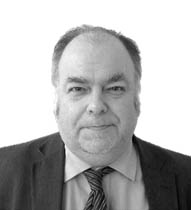
Benjamin MARSHALL
HVDC Technology Manager, The National HVDC Center
UK
Contact: Benjamin[dot]Marshall[at]sse[dot]com
Abstract:
・Multi vendor Interoperability in VSC-HVDC systems.
・What we’ve done.
・Demonstration and making it practical to deliver
・How we’ve done this.
・Growth of DC systems.
・What might they look like
・How to get to a vendor agnostic DCCB specification.
・Associated devices to enable DCCB.
・Practical DC system interfacing- offshore
・INTOG, Hydrogen- anything else to come?
・Load rejection management- practically..
・Co-ordinated and staged allocations of offshore grid forming
and damping controls.
・Practical DC system interfacing- onshore
・HVDC as a network vs a resource connection interface.
・Grid forming support from multi-terminal systems.
・Black start and other support.
・HVDC systems complementing resilience
・HVAC & HVDC system cross-optimisation.
Biography:
As the HVDC Technical Manager, Ben oversees the team of Simulation Engineers undertaking detailed HVDC simulation studies in real-time using vendor-supplied replica hardware, to understand multi-infeed, multi-terminal and multi-vendor HVDC operation and interactions, for real schemes in GB; interpreting the results to gain insights to improve the design and operation of HVDC schemes and their associated protection. Ben previously has had a 23 year long and varied career within National Grid with a broad range of experience, particularly with respect to the analysis of the operation and design of the AC and DC transmission systems. He has experience in both offline and realtime EMT simulation and in modelling of convertors across battery, solar wind and HVDC systems, and as deep understanding of dynamic stability of power systems how that relates to device performance.
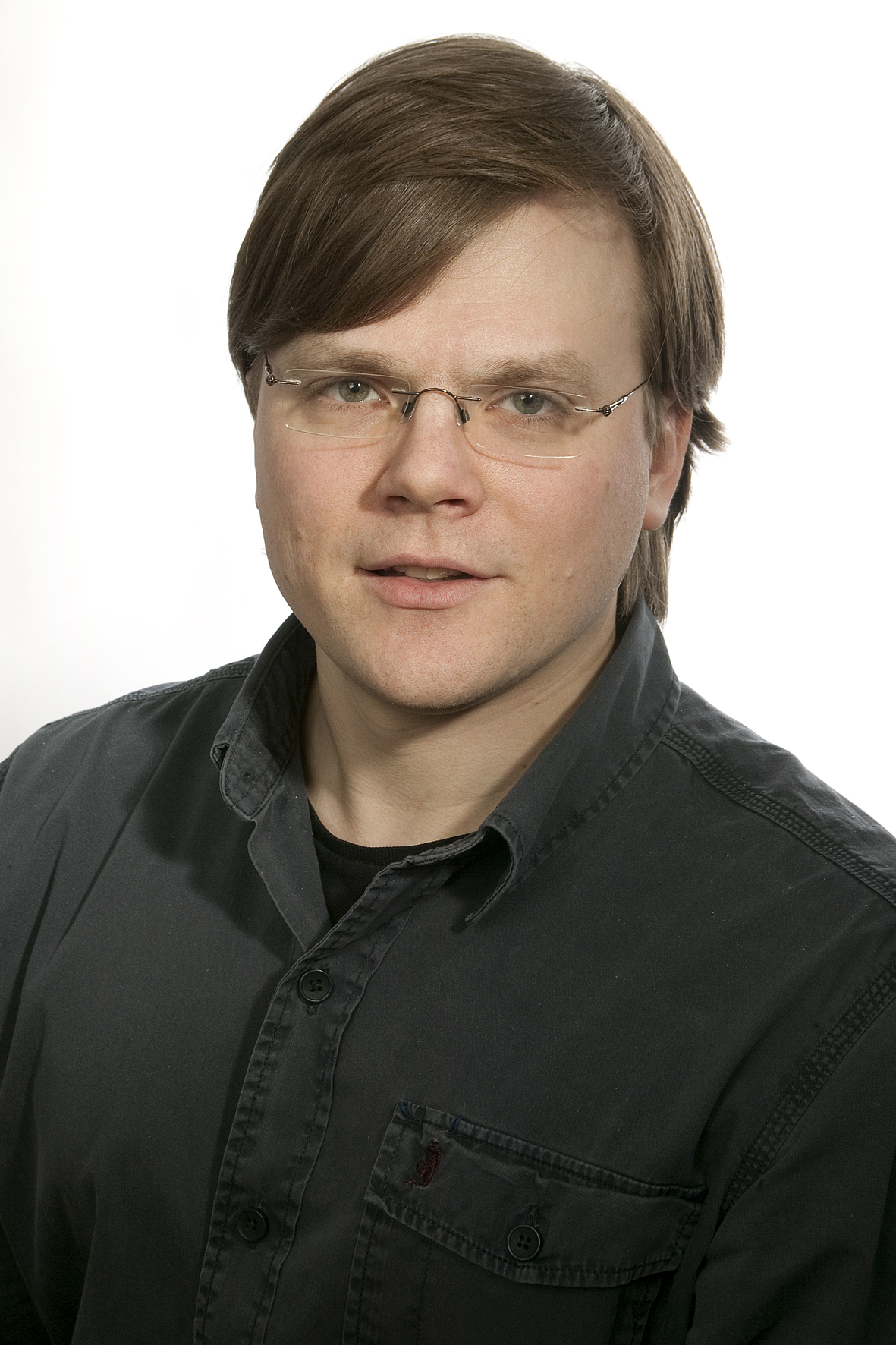
Jon Are SUUL
Senior Research Scientist, SINTEF Energy Research
/ Adjunct Associate Professor, NTNU
Norway
Contact: Jon[dot]A[dot]Suul[at]sintef[dot]no
Abstract:
Voltage Source Converter (VSC)-based HVDC terminals have high controllability, which can be utilized to provide services to the power system. This presentation will discuss how HVDC converters can be utilized as grid forming units by applying the concept of Virtual Synchronous Machine (VSM)-based control. The power-balance-based grid synchronization by a virtual swing equation will be discussed as the foundation for VSM-based control with inherent capability for providing virtual inertia support, and different categories of VSM implementations will be outlined. The presentation will also discuss how virtual inertia support based on estimation of the grid frequency derivative can be introduced as an auxiliary function to HVDC converts operated with conventional grid following control. The different characteristics of virtual inertia support strategies based on grid following and grid forming control, and the limitations for virtual inertia control in HVDC transmission systems, will be highlighted as a basis for discussing potential application scenarios.
Biography:
Jon Are SuuL received the M.Sc. degree in energy and environmental engineering and the Ph.D. degree in electric power engineering from the Norwegian University of Science and Technology (NTNU), Trondheim, Norway, in 2006 and 2012, respectively. From 2006 to 2007, he was with SINTEF Energy Research, Trondheim, where he worked with simulation of power electronic converters and marine propulsion systems. After completing his PhD studies, he resumed his position as Research Scientist at SINTEF Energy Research, first in a part-time position while working as a part-time Post-Doctoral Researcher at the Department of Electric Power Engineering, NTNU, until 2016. Since August 2017, he is also an Adjunct Associate Professor with the Department of Engineering Cybernetics, NTNU. His research interests are mainly related to modeling, analysis, and control of power electronic converters in power systems, renewable energy applications, and electrification of transport.
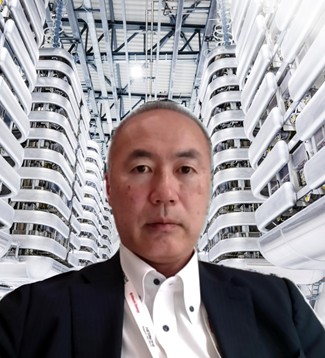
NISHIOKA Atsushi
HVDC Marketing & Sales Manager, Hitachi Energy Japan Ltd.
Japan
Contact: atsushi[dot]nishioka[at]itachienergy[dot]com
Abstract:
As Energy Transition progresses around the world toward net zero target, the construction of HVDC is rapidly in-creasing. HVDC can transmit clean power over a long distance with low losses, share the grid flexibility among areas across the borders and distances, and have various grid stabilization features, that improve the security of supply. That is why HVDC is considered as one of the key technologies for realizing the energy transition. This session provides HVDC applications and project cases.
Biography:
Atsushi Nishioka is marketing and sales manager at Hitachi Energy for Japanese HVDC market. He joined Hitachi Ltd. in 1991, where he was involved in the development of Adjustable Speed Pumped Storage Hydroelectric power plant systems and other power generation applications. He moved to transmission and distribution systems department in 2010. In 2015, he became the CEO of the joint venture between Hitachi and ABB (at that time) focused on HVDC business. Following Hitachi’s acquisition of ABB’s power grid business and the establishment of Hitachi Energy, he joined Hitachi Energy Japan and has been engaged in HVDC project development in Japan.
Q&A—Typical Questions
Editorial responsibility for the Q&A summary below lies with the IERE Central Office. The content has been consolidated and organized based on the discussions during the webinar, the chat exchanges, and subsequent confirmation by the presenters.
(I-1) Introduction
Q What is the real experience with multi-terminal HVDC systems?
A Multi-terminal HVDC systems have already been implemented in practical applications. In China, multi-terminal HVDC projects are in operation. In the UK, a three-terminal HVDC system in northern Scotland has been constructed, and all three terminals have now been commissioned, with commercial operation achieved in phases.
If LCC-based systems are included, examples date back to the 1980s, such as the Hydro Québec (Canada) – New England (US) system commissioned in 1986, as well as projects like North East Agra in India (2017). For VSC-based multi-terminal HVDC systems, representative examples include the Zhangbei project in China (2019) and the Caithness–Moray–Shetland project in the UK, whose final phase was commissioned in 2024.
In addition, several multi-terminal HVDC projects are currently under development or in planning stages, including the LionLink multi-purpose interconnector between the UK and the Netherlands, multi-terminal hub concepts in Germany, and the Sa.Co.I 3 project in Italy.
Q For multi-terminal systems, do all terminals come from the same vendor?
A At present, most multi-terminal HVDC projects are supplied by a single vendor. A notable exception is the Zhangbei multi-terminal DC grid in China, which is a multi-vendor system.
Historically, multi-terminal HVDC systems have been implemented since the 1980s, using both LCC and VSC technologies. In the UK case in Scotland, all three terminals are supplied by the same vendor and are now in commercial operation. While most existing projects are single-vendor systems, feasibility studies and research projects are underway to enable multi-terminal, multi-vendor HVDC systems, such as the InterOPERA project.
(L-1) Development and Application of Controllable Line Commutated Converter (CLCC)
Q Is it easier to install a new CLCC system, or is it possible to convert an existing LCC system into a CLCC system in terms of constructability and cost?
A Converting an existing LCC system into a CLCC system is feasible. The structure and interfaces remain compatible with the original configuration, and the conversion cost is relatively low compared to other solutions such as VSC-based systems.
Q In the slide, the IGBTs are shown connected in series. Considering voltage ratings, how many IGBTs need to be connected per arm?
A In the Genan refurbishment project, the main branch consists of eight levels of HVDC devices, while the auxiliary branch has eighteen levels per arm. Because the current rating is lower, this configuration is considered cost-effective.
Q In slide 21, only one on-site experience is mentioned. Is this correct?
A Yes. Slide 21 refers to a single on-site experience. Other CLCC projects in China are currently under planning.
Q When considering installation of a CLCC system, what factors should be considered? Are there limitations that would make CLCC unsuitable?
A The main considerations are the weight support capability of the existing converter valve hall and the water-cooling capability in refurbishment projects. These aspects may need to be enhanced depending on site conditions.
Q Is the control scheme of CLCC only grid-following (GFL)?
A Yes. The control scheme of CLCC is almost the same as that of conventional LCC systems.
Q Which components are most critical for development?
A The most critical components for development are the IGBTs in the auxiliary branch. These devices are required to switch off very high currents, potentially as high as five to eight times their normal current rating.
(L-2) The direction of HVDC network development in GB
Q Which components are most critical for multi-terminal HVDC development? Are DC breakers required, and are they used in DC switching stations?
A In the Caithness–Moray–Shetland project in northern Scotland, the system operates using DC disconnectors only, without DC circuit breakers. Energization was demonstrated from strong AC nodes at Moray and Blackhillock, as well as from Spittal near John o’Groats, to the Noss Head site, after which the terminals were interconnected. Energization of the third terminal, Shetland, was also achieved without DC circuit breakers.
During maintenance, the network can be reconfigured into two-terminal operation. One of the main technical challenges is the scale of indoor air-insulated equipment. Future development should focus on improving DC disconnectors and integrating them into gas-insulated solutions to enhance scalability, particularly for offshore applications.
Q Have studies been conducted on the prospects and viability of multi-terminal HVDC networks or projects in Africa?
A Some multi-terminal HVDC projects have been considered for Africa. However, most ongoing multi-terminal developments are currently concentrated in the United States (particularly along the East Coast), Europe, China, and Australia, mainly for medium-voltage applications.
Q Is the development of a worldwide HVDC network considered feasible?
A A worldwide HVDC network is technically feasible. Key considerations include interactions with existing power systems, the degree of interregional dependence, and the requirements for system operation and planning studies. In addition to technical and reliability aspects, political feasibility is also a significant factor.
Q In the multi-terminal slide, are these DC breakers?
A No. The slide refers to multi-infeed HVDC systems with multiple LCC converter stations, and therefore DC breakers are not used. In the Caithness–Moray–Shetland project, a DC Switching Station is installed at Noss Head to change DC circuit configurations, but this station does not include DC breakers.
Q Are DC switching stations composed entirely of DC breakers?
A No. In the Caithness–Moray–Shetland project, the DC Switching Station mainly consists of DC switches (disconnectors) and does not include DC circuit breakers.
(L-3) Grid Forming Control and Virtual Inertia Support by HVDC systems
Q In a strong grid, which is preferable for providing synthetic inertia—GFM control or GFL control?
A In strong grids, providing an initial synthetic inertia response using grid-following control is generally simpler if converters are not required to provide grid-forming functionality. Grid-forming control can be more challenging to design and tune in strong grids, although these challenges can be addressed.
If the requirement is limited to synthetic inertia, grid-following control is the simpler solution. If grid-forming services are required, virtual inertia can be incorporated within grid-forming control.
Q Are there limitations in using only DC-link capacitors to provide virtual inertia without battery storage?
A Limitations arise from the small energy capacity of the DC system and the allowable variation in DC voltage. Capacitive energy is typically limited, and the DC voltage is maintained only slightly above the minimum converter operating voltage, restricting the amount of energy extractable for AC-side inertial response while maintaining voltage constraints.
(L-4) HVDC application and project cases
No questions were submitted.
Join Us
Interested in IERE membership?
See the available options and how to apply.
Contact
Questions or proposals? We welcome your message.
Please also check our FAQ.